
Key Money, Deposit, Guarantor Fee: Japan Rental Terms
Reikin, shikikin, guarantor fees and renewal fees explained in plain English, with what is refundable and a ¥100,000 rent example.
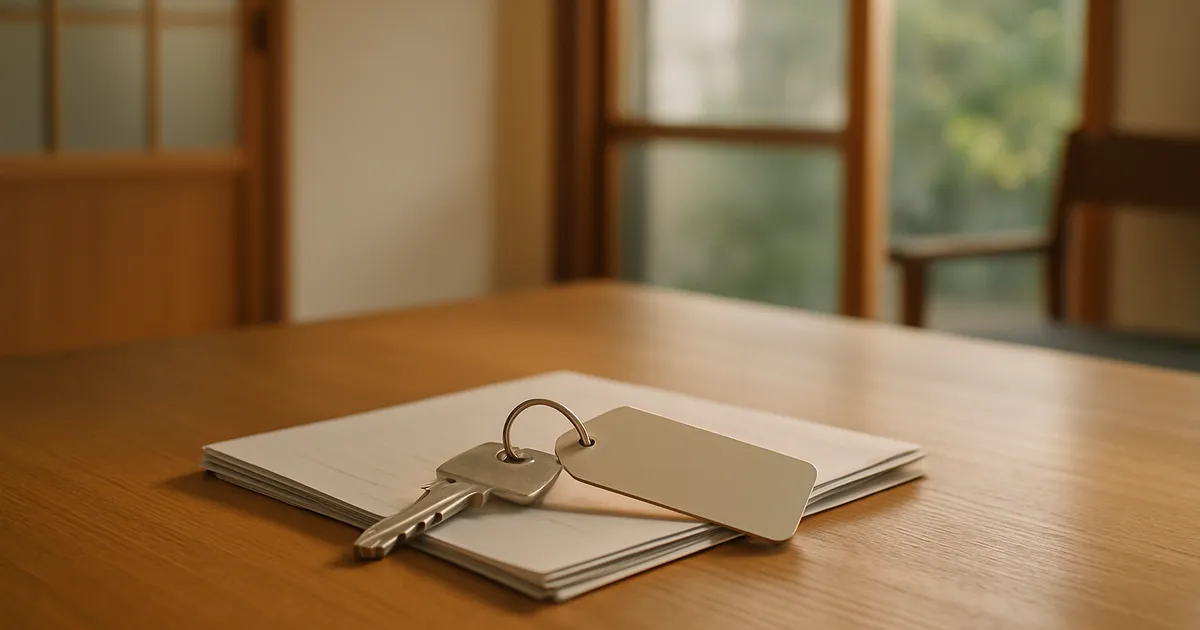
Key money (reikin) is a non-refundable payment to the landlord when you sign a Japanese lease, commonly zero to two months' rent. It sits next to the deposit (shikikin), which you get back minus repairs, and the guarantor fee, which you pay a company to vouch for you. Below are the terms you will see on a Tokyo rental quote, in plain English, with what is refundable and what is not.
What do the move-in fees on a Japanese lease mean?
Reikin (key money)
A one-time payment to the landlord, traditionally described as a thank-you for the lease. It is never refunded. Many listings now show zero reikin, and it can sometimes be negotiated on a property that has sat empty.
Shikikin (security deposit)
Money held by the landlord against unpaid rent and damage. Since the April 2020 Civil Code reform, the law defines it and requires the landlord to return it at the end of the lease, minus amounts you owe. Commonly zero to two months' rent.
Hoshonin and hosho gaisha (guarantor and guarantor company)
A hoshonin is a personal guarantor who pays if you do not. Most foreign renters use a hosho gaisha, a guarantee company, instead. Tokyo agencies commonly report an initial fee of 50% to 100% of one month's rent, plus a yearly renewal fee often around ¥10,000 (about US$67). Our main guide explains how to rent an apartment in Tokyo without a guarantor.
Chukai tesuryo (agent fee)
The brokerage fee for finding the apartment. Japan's brokerage rules cap the total for a rental at one month's rent plus consumption tax. By default it is split between landlord and tenant, but many agents ask the tenant to agree to pay the full month.
Maebarai yachin (rent in advance)
You usually pay the first month's rent at signing, often plus a prorated amount (hiwari) for the days left in the month you move in.
Kasai hoken (fire insurance) and key exchange
Most leases require tenant insurance for the contract period, and some charge a fee to change the lock for a new tenant. Both are set by the landlord or agent, so ask for the exact amounts.
What are the ongoing costs on a lease?
Yachin and kanrihi (rent and management fee)
Listings show rent plus a monthly kanrihi or kyoekihi (management or common-area fee) for building upkeep. Add both when comparing apartments.
Koshinryo (renewal fee)
A standard lease runs two years. In Tokyo, renewing often costs a renewal fee, commonly around one month's rent. Japan's Supreme Court ruled in 2011 that a clearly written renewal fee is valid unless the amount is unreasonably high.
Utilities
On a standard lease you open electricity, gas, water and internet accounts yourself. In a furnished monthly rental they are usually included. Our post on what monthly apartment Tokyo utilities included usually means lists the details.
What do the contract and move-out terms mean?
Futsu shakuya and teiki shakuya (regular and fixed-term lease)
A regular lease renews by default, and the landlord needs a legitimate reason to refuse renewal. A fixed-term lease ends on its end date with no automatic renewal, and must be made in writing. Check which one you are signing.
Kaiyaku yokoku (notice to cancel)
How far ahead you must tell the landlord you are leaving, often one month on a standard lease. Some contracts add a penalty for leaving in the first year.
Genjo kaifuku (restoration to original condition)
The cost of repairing the apartment when you leave, usually taken from the deposit. The Civil Code says tenants do not pay for normal wear and tear, and the Ministry of Land, Infrastructure, Transport and Tourism (MLIT) publishes guidelines on who pays for what. Sun-faded wallpaper is the landlord's cost. Cigarette stains are yours.
Layout codes: 1R, 1K, 1DK, 1LDK
The number is bedrooms. R is a single room, K a separate small kitchen, DK a dining kitchen, and LDK a living, dining and kitchen area. A 2DK has two bedrooms plus a dining kitchen.
How much do these fees add up to?
Take a ¥100,000 (about US$670) apartment with one month of deposit, one month of key money, the full agent fee and a 50% guarantor fee:
- Deposit: ¥100,000
- Key money: ¥100,000
- Agent fee: ¥110,000
- Guarantor fee: ¥50,000
- First month's rent: ¥100,000
That is ¥460,000 (about US$3,070) before insurance, the key exchange and furniture, and only the deposit can come back. Our monthly apartment Tokyo cost breakdown compares this with renting furnished by the month.
Which of these terms apply to our monthly homes?
Very few. Sengawa House and Tokiwadai House are listed with no key money, no guarantor and no agent fee. Rent on our monthly homes includes electricity, gas, water and internet. What you do pay is the monthly rent and, where the room page lists one, a one-time cleaning fee. At Sengawa House, a 1LDK near Ekoda Station, that is ¥160,000 (about US$1,070) a month with a ¥20,000 (about US$130) cleaning fee and a 30-night minimum. For the bigger picture, see our monthly apartment Tokyo guide.

FAQ
Is key money refundable in Japan?
No. Reikin is a non-refundable payment. The deposit, shikikin, is the refundable part.
Can I avoid paying key money?
Yes. Look for listings marked zero reikin, ask the agent to negotiate, or rent a furnished monthly apartment, which normally has no key money.
What is the difference between a guarantor and a guarantor company?
A guarantor is a person who agrees to pay your debts to the landlord. A guarantor company does the same job for a fee and is what most foreign renters use.
Is the agent fee always one month's rent?
One month plus tax is the legal maximum in total. Some agents charge less, and some listings have no agent fee at all.
Rather skip the key money and the guarantor? Check move-in dates for Sengawa House near Ekoda, or browse all our furnished homes.
Dollar figures use ¥150 = US$1.
Monthly homes near Ekoda

Planning a trip?
Ask us anything about the area in English.