
· Updated
Temporary Housing in Tokyo for Relocating Professionals
Furnished monthly homes for your first 1–3 months in Tokyo: no key money or guarantor, from ¥90,000 a month with utilities included.
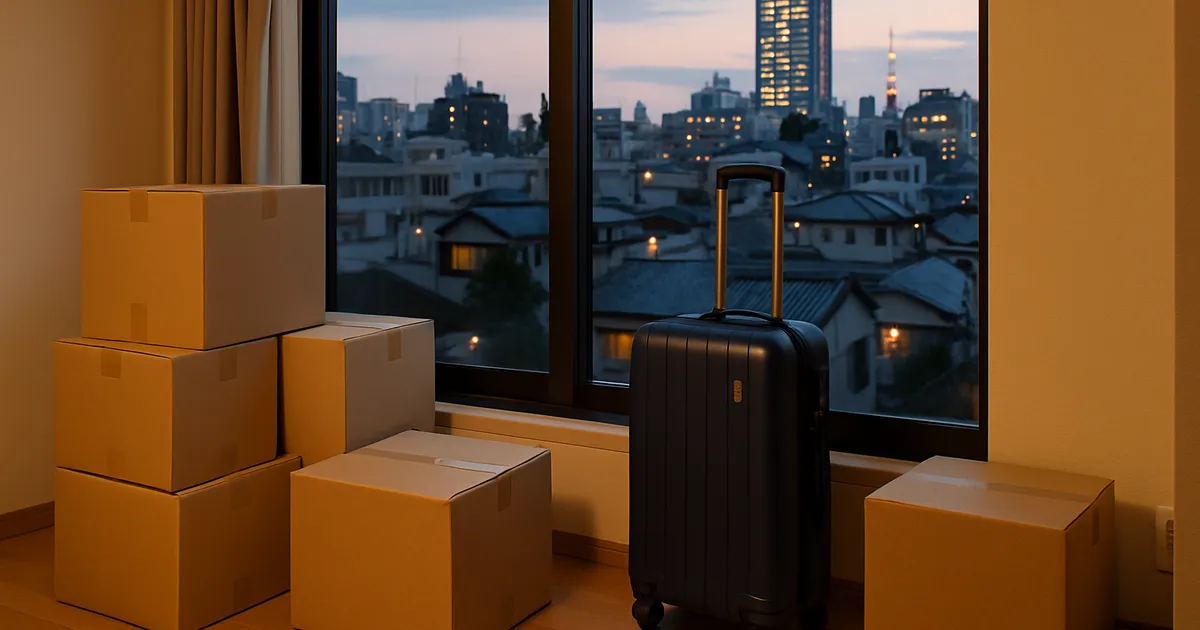
If you are relocating to Tokyo for work, the simplest temporary housing is a furnished monthly apartment or house that you can book from abroad, move into on arrival day, and leave after one to three months. A standard Japanese lease usually runs two years, asks for key money, a deposit, an agent fee and a guarantor, and comes with no furniture, so it is a poor fit for your first weeks. A monthly rental skips those fees and gives you a stable address while you find a long-term home.
We run furnished homes in Ekoda, Nerima and Toda in northwest Tokyo, on or near the Seibu Ikebukuro Line. This guide covers what temporary housing options exist, what they cost, how to time the move, and what to check before you sign. It is written for people on assignment or starting a new job, often with an employer helping with costs.
Why do most people relocating to Tokyo start in temporary housing?
Three things make it hard to sign a normal lease before you land:
- Screening needs documents you do not have yet. Landlords and guarantor companies usually ask for a residence card, a Japanese phone number, proof of income in Japan and an emergency contact. Many new arrivals get these only in their first weeks.
- Upfront costs are high. A typical lease asks for reikin (key money, a non-refundable payment to the landlord), shikikin (a refundable deposit), an agent fee of up to one month's rent plus tax, a guarantor company fee and the first month's rent. We explain each one, and how a monthly rental avoids them, in our monthly apartment Tokyo pillar guide.
- You cannot judge a commute from abroad. A 25-minute ride on a map can mean a packed train with a transfer at Shinjuku. Living in the city for a month first lets you test the route at 8 a.m.
Temporary housing solves all three. You sign a short contract, the home is ready on day one, and you can view long-term apartments in person while you settle in.
What are the temporary housing options in Tokyo?
Most relocating professionals choose between four types of stay. Each has a place.
Business hotels
Good for the first few nights, especially if your start date moves. Rooms are small, there is rarely a kitchen or washing machine, and the nightly rate adds up fast over a month. We compare the two in detail in our monthly apartment Tokyo guide.
Serviced apartments
Central Tokyo has serviced apartments with front desks and weekly cleaning, often in Minato or Shibuya. They suit executives on a generous housing budget. Expect to pay for the location and the service.
Monthly apartments and houses
A monthly apartment (often called a "monthly mansion" in Japan) is a furnished home rented by the month. Rent usually includes utilities and internet, and there is no key money or guarantor. This is the format we run. It works well for one to six months, and our post on short-term apartments in Tokyo explains how the contracts work.
Share houses
Cheaper and social, with a private bedroom and shared kitchen. Fine for a single person on a tight budget, less so for someone taking work calls at 7 a.m. or moving with a partner or children.
How much does temporary housing in Tokyo cost?
Here is what our own monthly homes cost. Rent on our monthly homes includes electricity, gas, water and internet, so the number below is close to what you pay each month.
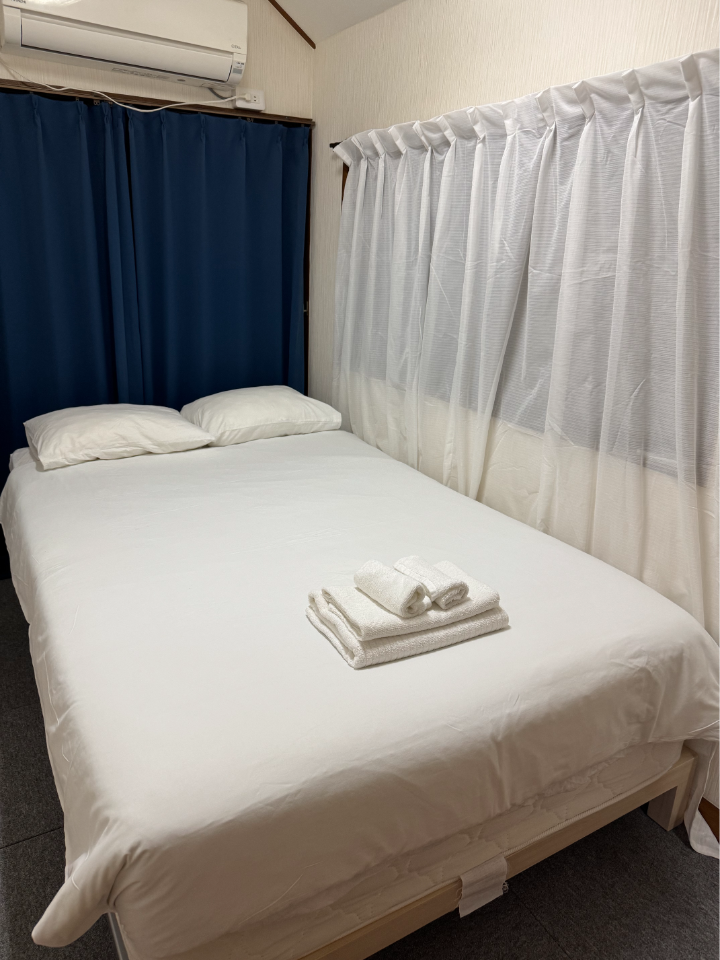
- Cozy Studio near Ekoda: ¥90,000 (about US$600) a month for one person. A renovated studio in a wooden house with a double bed, private shower and toilet, and a private kitchen and washing machine. 8-minute walk from Ekoda Station.
- Sengawa House: ¥160,000 (about US$1,070) a month, 1LDK (one bedroom plus a living-dining-kitchen) for one or two people, 3-minute walk from Ekoda Station. Minimum stay 30 nights, plus a one-time cleaning fee of ¥20,000 (about US$130).
- Tokiwadai House: ¥180,000 (about US$1,200) a month, 2DK (two bedrooms plus a dining kitchen), for one or two people, 8-minute walk from Tokiwadai Station on the Tobu Tojo Line.
- Toda 3DK House: ¥150,000 (about US$1,000) a month for a 63 m² three-bedroom on the 6th floor of a building with an elevator, sleeping up to 8. A bus ride to Kita-Toda or Musashi-Urawa on the JR Saikyo Line.
- Nana House Ekoda Monthly House: ¥350,000 (about US$2,330) a month for a whole 3LDK house for up to 4 people, 8-minute walk from Ekoda Station.
Sengawa House and Tokiwadai House are listed with no key money, no guarantor, no agent fee and English support. For more homes one or two stops out, see our post on Ikebukuro monthly apartment options.

Where should you base yourself for a temporary stay?
Central wards such as Minato, Chiyoda and Shibuya put you close to many offices, but furnished homes there are expensive and small. The residential northwest is a practical trade-off. From Ekoda, the Seibu Ikebukuro Line reaches Ikebukuro in about 8 minutes. From there you can change to the JR lines for Shinjuku and Shibuya or to the Marunouchi Line for Otemachi and Tokyo Station.
Timetable searches on Yahoo! Japan Transit for a weekday 8 a.m. departure give these station-to-station times from Ekoda, including the transfer:
- Ikebukuro: about 8 minutes, direct.
- Shinjuku: about 21 minutes, changing at Ikebukuro to the JR Saikyo Line or Shonan-Shinjuku Line.
- Shibuya: about 27 minutes, same change at Ikebukuro.
- Otemachi: about 33 minutes, changing at Ikebukuro to the Tokyo Metro Marunouchi Line.
Add your walk to the station and a few minutes of buffer for a door-to-door figure. Rush-hour trains on these routes are crowded. Check your own route on a journey planner before you book, and see our Ekoda and Nerima stay guide for what daily life in the area looks like.
How should you time your relocation housing?
A sequence that works for many people moving on assignment:
- Six to eight weeks before you fly: book a furnished monthly home for your first one to three months. Popular homes fill early around April, when many Japanese companies and schools start their year.
- Arrival week: collect your residence card at the airport if your visa issues one, then register your address at the ward or city office. The Immigration Services Agency says mid- to long-term residents must report their place of residence within 14 days of settling on it. If you plan to register the address of your temporary home, tell us before you book so we can confirm what is possible for that property.
- Weeks one to three: open a bank account, get a Japanese phone number and test the commute at real rush hour.
- Weeks three to eight: view long-term apartments in person, apply, and wait for screening. Screening by a guarantor company can take several days.
- Final weeks: sign the long-term lease, then move out of your temporary home at the end of its term.
If your family is joining you later, a whole house such as the Ekoda Monthly House gives everyone space during that first stretch.
What if your employer is paying for temporary housing?
Many companies cover the first month or two of housing for transferees. If yours does, sort out these points with HR before you book:
- Who signs and who pays. Some companies book in their own name, others reimburse you. Ask us early if you need the booking or receipt in a company name.
- What the allowance covers. Our monthly homes include utilities in the rent, which makes a flat monthly allowance easier to stick to. Cleaning fees and any extra-guest charges are listed separately on the room page.
- The commute cap. Some companies set a maximum commute time or a maximum commuter pass cost. Check the route before you choose a home.
- Dates. Start dates slip. Ask about date changes and cancellation terms before you pay.
How do you move from temporary housing to a long-term lease?
A month in a residential area answers questions you cannot answer from abroad: how long the morning commute really takes, whether you like a quiet suburb or need to be near nightlife, and how much space you actually use. Many guests use their stay to view apartments at their own pace instead of signing the first place they see.
When you are ready for a standard lease, our partner Shin Housing (shinhousing.com) specializes in long-term rentals for foreign residents, offers English support and handles the guarantor process. It has listings in Ekoda and Nerima, so you can stay in the same neighborhood once your temporary stay ends. If you prefer to search on your own, Suumo (in Japanese), GaijinPot Housing and Real Estate Japan (realestate.co.jp) list long-term rentals across Tokyo.
Most standard leases in Tokyo run for two years and renew for a fee, while a few properties offer fixed-term contracts that end on a set date. Ask which type you are signing and how much notice you must give to leave early.
Before you sign anything long-term, ask the agent for an itemized list of move-in costs so you know which fees are standard and which you can negotiate. If you work remotely part of the week, our guide to digital nomad apartments in Tokyo covers desks and Wi-Fi.
What should you check before booking a temporary apartment?
- The exact move-in and move-out dates, and what happens if you need to extend.
- What the rent includes: utilities, internet, linens, cleaning.
- One-time fees, such as a cleaning fee at the end of the stay.
- How many people the home allows. Our homes are priced for a set number of guests.
- Whether you can register the address, if you need to.
- Check-in method. Our nightly houses use self check-in with a keypad code sent the day before.
- Consumables. In our monthly homes, basics such as shampoo and detergent are supplied for the first days only, after which you buy your own.
FAQ
How long can I stay in temporary housing in Tokyo?
Monthly rentals usually start at one month. Sengawa House and Cozy Studio near Ekoda have a 30-night minimum. Longer stays are common, so ask about extensions when you book.
Do I need a guarantor for a temporary apartment?
Not with most monthly rentals. Sengawa House and Tokiwadai House are listed with no guarantor, no key money and no agent fee.
Can I book before I arrive in Japan?
Yes. That is the main reason people choose a monthly home over a standard lease, which usually needs documents you only get after arrival.
Is northwest Tokyo too far from the office?
It depends on where you work. From Ekoda, Shinjuku is about 21 minutes and Otemachi about 33 minutes by train on a weekday morning, station to station. Offices in Ikebukuro are about 8 minutes away.
Can my family stay with me?
Yes, if the home fits. The Nana House Ekoda Monthly House takes up to 4 people and the Toda 3DK House up to 8.
Starting a job in Tokyo soon? Check move-in dates for Sengawa House, a 1LDK 3 minutes from Ekoda Station, or browse all our furnished homes.
Dollar figures use ¥150 = US$1. Train times are from Yahoo! Japan Transit timetable searches for a weekday 8 a.m. departure (October 2026 timetables) and change with timetable revisions.
Monthly homes near Ekoda

Planning a trip?
Ask us anything about the area in English.