
Autumn Leaves Near Nerima: Shakujii Park & Hikarigaoka
Where to see autumn leaves in Tokyo near Nerima: free parks 15 to 20 minutes from Ekoda, peak late November to early December, and where to stay.
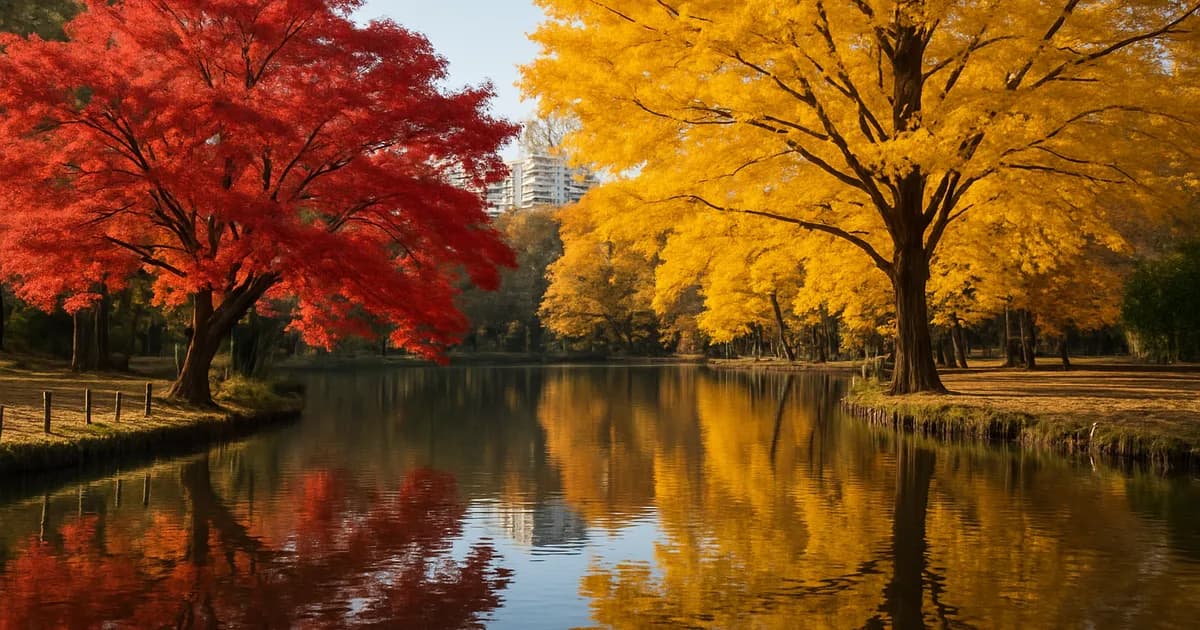
Autumn leaves in Tokyo usually peak from mid-November to early December, and near Nerima the best local spots are Shakujii Park, Hikarigaoka Park and Johoku Chuo Park. Ginkgo trees turn gold first, around mid to late November, and maples usually follow in late November and early December. All three parks are free, a short train ride from our homes in Ekoda and Nerima, and far calmer than central Tokyo on a peak weekend.
When do autumn leaves peak in Tokyo?
The Tokyo Metropolitan Government's GO TOKYO site gives the city's main season as mid-November to early December. Mountain areas turn earlier: Lake Okutama from late October and Mount Takao from mid-November. The large gardens in the city center, such as Rikugien, often hold their color into mid-December.
Exact timing moves by a week or so each year with the weather, so check a current forecast in early November before you fix a day. Late-November days are usually mild, with highs in the mid-teens °C (around 57 to 61°F), but mornings and evenings are chilly. Bring a warm layer.
Is Shakujii Park good for autumn leaves?
Yes, and it is our first pick. Shakujii Park is a Tokyo metropolitan park built around two ponds. The quieter one, Sanpoji-ike, is ringed by trees and is the main autumn spot, with maples, zelkova and ginkgo reflected in the water. Its waterside plant community is a protected natural monument. The larger Shakujii-ike has rowboats and swan boats, which usually run from March to November, so late November can be your last chance to see the leaves from the water. Check the boathouse for current prices and hours.
Getting there: Shakujii-koen Station is on the Seibu Ikebukuro Line, the same line as Ekoda and Nerima, and the park is about a 7-minute walk from the station. From Ekoda it is a direct ride of roughly 15 minutes, with no change. Allow 1 to 2 hours to walk both ponds.
What about Hikarigaoka Park?
Hikarigaoka Park covers more than 60 hectares at the northern end of the Toei Oedo Line. It is best known for its ginkgo trees. A path of tall, old ginkgo trees links Hikarigaoka Station to the park, and more ginkgo inside turn the ground gold for a few weeks. The park also has wide lawns, a kids' play area, sports fields and a bird sanctuary, so it works well for a family picnic.
Getting there: take the Oedo Line from Nerima Station to Hikarigaoka, the last stop, then walk about 8 minutes. From Ekoda, ride the Seibu line two stops to Nerima and change.

Are there autumn spots within walking distance of Ekoda?
Johoku Chuo Park, north of Ekoda along the Shakujii River, is the closest large park to our Ekoda homes. It has about 9,000 trees, including zelkova and ginkgo, and its ginkgo rows are the reason to visit in autumn. It is less of a destination than Shakujii or Hikarigaoka, but good for a morning walk or a run under yellow leaves. The nearest station is Hikawadai on the Yurakucho and Fukutoshin lines.
For a slower day close to home, our Ekoda Tokyo local guide covers the bakeries, bathhouse and shopping streets around the station.
Which famous spots are an easy trip from Nerima?
If you want the classic autumn photos too, these are straightforward from our area. Peak periods below are from GO TOKYO:
- Rikugien Gardens (Komagome): late November to mid-December. A traditional Edo-period garden, reached via Ikebukuro and the JR Yamanote Line.
- Shinjuku Gyoen National Garden: mid-November to early December. Paid entry. About 30 to 40 minutes from Ekoda.
- Meiji Jingu Gaien ginkgo avenue: mid-November to early December. Very crowded on peak weekends, so go early on a weekday.
- Showa Kinen Park (Tachikawa): late November to mid-December. A huge park in west Tokyo, best for a full day.
- Mount Takao: mid-November to early December. A real hike with a cable car option. Weekday mornings are much quieter.
Where should you stay for the autumn leaves?
Late November is popular, and central hotels charge accordingly. A house in Nerima puts Shakujii Park, Hikarigaoka Park and Johoku Chuo Park within about 20 minutes, with Shinjuku and Ikebukuro still close for the rest of your trip.
- Nana House Nerima: a 2-bedroom house near Nerima Station for up to 6 guests, from ¥12,000 a night (about US$80) for two plus ¥4,000 per extra guest and an ¥8,000 cleaning fee. Nerima Station is three stops from Hikarigaoka on the Oedo Line.
- Nana House Ekoda: a 3-bedroom house 8 minutes from Ekoda Station for up to 8 guests, from ¥14,000 a night (about US$93) plus extras and cleaning.
If you are already thinking about spring, the same parks are some of the best local cherry-blossom spots. Read our guide on where to stay in Tokyo for cherry blossom season before rooms fill up, and our Ekoda and Nerima stay guide for train times and neighborhoods.

FAQ
What is the best week for autumn leaves in Tokyo?
Usually the last week of November into the first days of December. Ginkgo tends to peak a little earlier than maples. Check a current forecast before you fix a date.
Do I need tickets for Shakujii Park or Hikarigaoka Park?
No. Both are free public parks. Boat rental at Shakujii Pond is paid.
Are the Nerima parks crowded in autumn?
Less than central spots such as Meiji Jingu Gaien or Shinjuku Gyoen. Weekends are busier, but you can usually find space on the paths.
Is Nerima a good base for an autumn trip?
Yes. You get local autumn spots within about 20 minutes and Shinjuku within about 25, plus a whole house with a kitchen.
Planning a late-November trip? Check dates for a 2-bedroom house near Nerima Station or the 3-bedroom house near Ekoda.
Dollar figures use ¥150 = US$1.
Stay near Ekoda


Planning a trip?
Ask us anything about the area in English.