
· Updated
Digital Nomads in Tokyo: Monthly Furnished Apartments
Monthly apartments in Tokyo for remote workers from ¥90,000 with Wi-Fi and utilities included, 1–6 month stays, no guarantor.
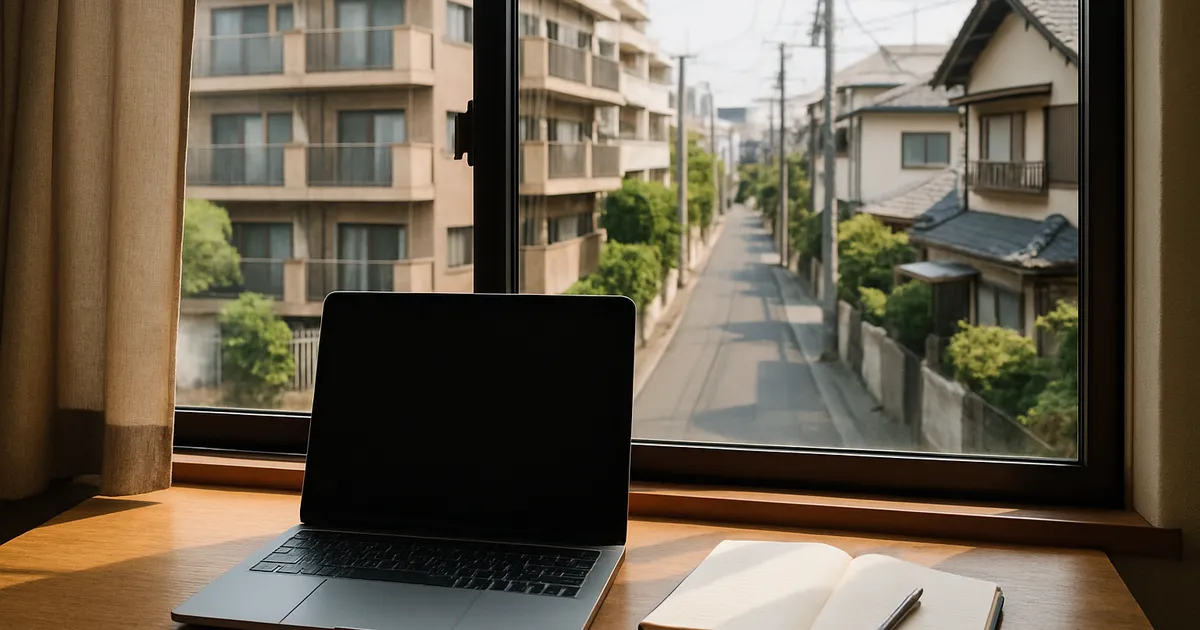
The best digital nomad apartment in Tokyo is a furnished monthly home with its own kitchen, a washing machine, unlimited Wi-Fi and a quiet room for calls, rented on a 1- to 6-month contract with utilities included. Ours start at ¥90,000 (about US$600) a month near Ekoda Station, about 7 minutes by train from Ikebukuro, with no key money, no guarantor and no agent fee.
We host remote workers in our homes in northwest Tokyo, and this guide covers what actually matters for a month or more of work here: what to check in the apartment, which neighborhood suits a working routine, how the visa length shapes your booking, and what a realistic monthly budget looks like. For the wider market, see our complete monthly apartment Tokyo guide.
Why does Tokyo work for remote work?
Internet you do not have to think about
Fiber broadband is standard in Japanese homes, including in residential neighborhoods far from the center, and mobile data is reliable on trains and in stations. In most furnished monthly homes the home Wi-Fi is enough for video calls, so you do not need a pocket Wi-Fi router as a primary connection. If your work involves large uploads or live streaming, ask the host for a recent speed test that shows the upload figure, not only download.
Safety and routine
Tokyo is safe to walk at night, the trains run on time, and convenience stores are open around the clock. That makes an odd working schedule easy to live with.
Time zones
Japan Standard Time is UTC+9 all year, with no daylight saving time. That suits clients in Australia and East Asia. For Europe, Tokyo afternoons overlap with European mornings. For the US it is harder: Tokyo is 13 hours ahead of New York in US summer time and 14 hours ahead in winter, and 16 to 17 hours ahead of Los Angeles. Many of our US guests do focused work during the Tokyo day and take calls early in the morning or late in the evening, Tokyo time.
What should a digital nomad apartment in Tokyo have?
Non-negotiables
- Unlimited, fast Wi-Fi included in the rent. Avoid capped mobile routers as the only connection.
- A real work surface. A dining table is fine for a month. A low coffee table or the bed is not. Look closely at the photos, or ask.
- Air conditioning and heating. Tokyo summers are hot and humid, often above 35°C (95°F), and winter nights drop near 0°C (32°F). Each of our monthly homes has air conditioning.
- Natural light in the room where you work.
Strongly recommended
- A washing machine inside the home. Coin laundries work, but they eat time every week.
- A full kitchen. Cooking at home a few days a week cuts costs and saves the daily search for lunch.
- A quiet street. Residential neighborhoods are far quieter on calls than flats above a bar street.
- A station within about 10 minutes' walk, so the rest of Tokyo stays easy on your days off.
Contract terms
- Utilities and internet included in one monthly price.
- No reikin (key money), no guarantor, no agent fee.
- A contract that can match your visa length, and a clear answer on extending.

Which of our homes suit remote workers?
All of our monthly homes include electricity, gas, water and internet in the rent. Here is how they compare for working stays.
| Home | Best for | Work setup | Monthly rent |
|---|---|---|---|
| Cozy Studio near Ekoda | One person on a budget | Studio in a renovated wooden house; private kitchen, shower, toilet and washing machine | ¥90,000 (about US$600) |
| Hasu House | Solo nomads who like some company | Private bedroom with its own desk, chair and air conditioner; shared kitchen and living room | From ¥90,000 (about US$600) for 1 guest |
| Sengawa House | Couples, or one person who wants a separate bedroom | 1LDK: work in the living room, sleep in the bedroom; 3 min walk to Ekoda Station; elevator building | ¥160,000 (about US$1,070) |
| Tokiwadai House | Two people who both take calls | 2DK: two separate rooms plus a kitchen; 10 min by train to Ikebukuro | ¥180,000 (about US$1,200) |
The Cozy Studio and Sengawa House have a 30-night minimum, and Sengawa House adds a one-time cleaning fee of ¥20,000 (about US$130). Hasu House rents by the room, and a second guest in the same room adds ¥20,000 a month. We have written up rent, layouts and train times for each home in our Ikebukuro monthly apartment guide.

Where should a digital nomad live in Tokyo?
Many first-time nomads book Shinjuku or Shibuya because that is the Tokyo they have seen in photos. Both are great to visit. Neither is ideal for a month of focused work: rents are high, apartments are small, and the streets stay loud late into the night.
A residential area one or two train stops out from a big hub gives you a better working month:
- Lower noise. You can open the window in spring and fall and still take a call.
- Lower rent for more space. Our 1LDK and 2DK homes cost less per month than many studios in central wards.
- Real daily life. Shopping streets, supermarkets, sento (public baths) and small restaurants where staff start to recognize you.
- Short rides to the center. From Ekoda, Ikebukuro is about 7 minutes by local train and Shinjuku about 17 minutes with one change.
Ekoda is a student town, home to Nihon University College of Art and Musashino Academia Musicae, so there are cheap lunch spots and cafes around the station. Our guide to living in Ekoda, Tokyo covers supermarkets, food and daily errands.
Where can you work outside the apartment?
Most of our guests work from home and go out once or twice a week for a change of scene.
- Coworking in Ikebukuro. Ikebukuro, 7 minutes from Ekoda, has several drop-in coworking spaces. One example: Basis Point Ikebukuro, a 1-minute walk from the JR east exit, lists drop-in open seating at ¥330 (about US$2.20) for the first 30 minutes, capped at ¥3,300 (about US$22) a day. WeWork also has locations in Ikebukuro for members.
- Coworking at Nerima Station. Two stops from Ekoda, emiffice Nerima sits inside Nerima Station and lists open seating from ¥110 per 15 minutes. Check the operator's site for current prices and hours before you go.
- Cafes. Chain and independent cafes around Ekoda and Ikebukuro are generally fine with a laptop outside the lunch rush. Buy something every couple of hours and keep calls short.
- Manga cafes (net cafes). Private booths with Wi-Fi and drinks, charged by the hour or in packs. Useful for a quiet few hours or a late-night deadline.
How long can a digital nomad stay in Japan?
Japan's digital nomad status is a type of Designated Activities visa introduced in 2024. According to the Immigration Services Agency of Japan, it requires an annual income of at least ¥10 million (about US$67,000), private medical insurance, and remote work for employers or clients outside Japan. The stay is up to 6 months, with no extension; after it ends you wait 6 months before applying again. Eligible nationalities are countries with both a visa-exemption arrangement and a tax treaty with Japan, which include the US, UK, Canada and Australia. Rules change, so read the Immigration Services Agency and Ministry of Foreign Affairs pages before you apply.
For housing, the practical point is simple: book month by month. A monthly contract lets you match your stay to your visa dates and avoid a standard two-year lease that you would have to break.
What does a month in Tokyo cost a remote worker?
Housing is the biggest line and the only one we can price exactly. In our homes, rent already covers utilities and internet:
- Studio near Ekoda: ¥90,000 (about US$600) a month
- Private room at Hasu House: from ¥90,000 (about US$600)
- 1LDK by Ekoda Station: ¥160,000 (about US$1,070), plus a ¥20,000 one-time cleaning fee
- 2DK by Tokiwadai Station: ¥180,000 (about US$1,200)
On top of rent, plan for a phone plan or eSIM, train fares (most rides within the city are a few hundred yen), food, and coworking if you use it. Cooking at home most days keeps food costs well below eating out, and a supermarket is a short walk from each of our homes.
Compared with a hotel, the gap opens fast once you pass a few weeks: a hotel rarely includes a kitchen, a washing machine or a separate room to work in, and the nightly rate does not get smaller. For stays shorter than a month, see our short-term apartment Tokyo guide.
Where do nomads find monthly apartments in Tokyo?
- Hosts that rent directly. Booking direct with the people who run the home usually means one contract, one contact and a clear answer on extensions. Our full list is on our furnished homes in Tokyo page.
- Furnished-apartment and share-house companies that specialize in foreign residents. Compare the total monthly price, including any cleaning, contract or utility fees.
- Short-stay platforms with monthly discounts. Convenient, but check that the listing is legal for long stays and that the price includes utilities.
- Expat and nomad groups online. Useful for recommendations. Never send a deposit for a place you have not verified.
Whatever you choose, avoid anything that asks for reikin (key money) or a Japanese guarantor for a stay of a few months. Those belong to long-term leases, not furnished monthly rentals.
FAQ
Is the Wi-Fi fast enough for video calls?
Yes. Our homes have unlimited high-speed Wi-Fi included in the rent, and guests use it for daily video calls. If you need a specific upload speed, ask us before booking and we will share a recent test.
Can I rent for exactly 6 months to match my visa?
Yes. Our monthly homes rent by the month, so a 6-month stay is six monthly periods. Ask early, because longer stays block the calendar.
Do I need a guarantor or key money?
No. Our monthly homes have no guarantor requirement, no key money and no agent fee. We explain the contract and payment in English when we confirm your booking.
Which home is best for two people working at the same time?
The Tokiwadai House 2DK, which has two separate rooms, so two calls can run at once without talking over each other.
How far is Ekoda from central Tokyo?
About 7 minutes to Ikebukuro by local train on the Seibu Ikebukuro Line, and about 17 minutes to Shinjuku with one change.
Book your working month
Working solo on a budget? Check dates for the Cozy Studio near Ekoda, ¥90,000 a month with Wi-Fi included. Need a desk in your own room with housemates around? See which Hasu House rooms are free.
Dollar figures use ¥150 = US$1.
Monthly homes near Ekoda

Planning a trip?
Ask us anything about the area in English.